I’m writing this on January 3, 2026, just hours after one of the most extraordinary events in modern international relations. Early this morning, United States military forces conducted “Operation Absolute Resolve”—a massive strike on Venezuela that resulted in the capture of President Nicolás Maduro and his wife Cilia Flores. They were literally pulled from their country, flown to the USS Iwo Jima, and are now en route to New York to face narcoterrorism charges.
This is unprecedented. A sitting head of state captured by U.S. forces and removed from his country. The last time anything remotely similar happened was 36 years ago—exactly to the day—when Manuel Noriega surrendered in Panama in 1990.
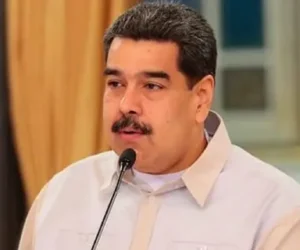
So let me tell you the Nicolás Maduro biography—how a former bus driver became president of Venezuela, how he presided over one of the worst economic collapses in modern history, how he clung to power despite international condemnation, and how his presidency ended this morning in a hail of U.S. airstrikes and a helicopter extraction.
This is the story of rise, power, collapse, and ultimately, capture.
The Beginning: Born Into Working-Class Caracas
Nicolás Maduro Moros was born on November 23, 1962, in Caracas, Venezuela, to Nicolás Maduro García (a prominent trade union leader) and Teresa de Jesús Moros.
He grew up in a working-class neighborhood in western Caracas. His father’s union activism shaped young Nicolás’s political consciousness from an early age. This wasn’t a privileged upbringing—this was real working-class Venezuela, where labor rights and socialist ideals were discussed around the dinner table.
Maduro attended high school at the Liceo José Ávalos in El Valle, Caracas. But unlike many world leaders, he didn’t go to university. His education was in the streets, in union halls, in political movements.
The Bus Driver Years
In his youth, Maduro worked as a bus driver in the Caracas Metro system. This detail became famous (and controversial) later in his political career.
Critics mocked him as “the bus driver president,” using it as an insult to suggest he was unqualified for leadership. Supporters embraced it as proof he was a man of the people, someone who understood ordinary Venezuelans because he’d lived their life.
The truth? He was both. He was genuinely from working-class roots, AND he lacked the traditional credentials and intellectual depth of most heads of state.
The Revolutionary: Joining the Bolivarian Movement
In the 1980s, Maduro became involved in leftist political movements. He joined the Socialist League, a far-left political party.
But the turning point came in 1992 when a charismatic army lieutenant colonel named Hugo Chávez attempted a coup against the Venezuelan government. The coup failed, Chávez was imprisoned, but his televised speech accepting responsibility made him a folk hero to many Venezuelans.
Maduro recognized Chávez’s potential immediately. When Chávez was released from prison in 1994, Maduro became one of his earliest and most loyal supporters.
The Chávez Years: The Loyal Disciple
When Hugo Chávez won the presidency in 1998, launching the “Bolivarian Revolution,” Maduro was right there beside him.
Chávez appointed Maduro to increasingly important positions:
- Member of the National Assembly (2000-2006)
- President of the National Assembly (2005-2006)
- Minister of Foreign Affairs (2006-2013)
As Foreign Minister, Maduro became the face of Venezuela’s foreign policy, building relationships with leftist governments across Latin America, strengthening ties with Cuba, Iran, Russia, and China, and positioning Venezuela as a leader of anti-American sentiment in the region.
He was Chávez’s most trusted lieutenant. While others in the movement had more charisma, more intelligence, or more political skill, nobody was more loyal than Maduro.
2013: The Anointed Successor
In December 2012, Hugo Chávez—battling cancer—made a stunning announcement. He named Nicolás Maduro as his successor, telling Venezuelans that if he didn’t survive, they should vote for Maduro to continue the Bolivarian Revolution.
On March 5, 2013, Hugo Chávez died.
Maduro became interim president immediately. But he needed to win an election to legitimize his rule.
The Controversial 2013 Election
On April 14, 2013, Venezuela held a special presidential election. Maduro faced Henrique Capriles, the opposition candidate.
The results: Maduro won with 50.62% of the vote to Capriles’s 49.12%—a margin of just 1.5%, or about 235,000 votes.
Capriles immediately cried fraud, demanding a full recount. The opposition claimed irregularities in the voting process. International observers noted concerns about the fairness of the election.
But Maduro was sworn in as president on April 19, 2013. The Chávez era was over. The Maduro era had begun.
And almost immediately, everything started falling apart.
The Economic Collapse: Venezuela’s Descent
Here’s the harsh reality: Hugo Chávez’s economic policies were unsustainable, but high oil prices masked the problems. When Maduro took over, oil prices began falling, and the Venezuelan economy—which depended almost entirely on oil revenue—collapsed catastrophically.
The Numbers Tell the Story
Under Maduro’s presidency:
- GDP contracted by over 75%
- Inflation reached levels not seen outside of war zones
- Hyperinflation peaked at over 1,000,000% in 2018
- The bolivar (Venezuelan currency) became essentially worthless
- Poverty rates exploded from around 30% to over 90%
- Millions fled the country—creating one of the largest refugee crises in the Western Hemisphere
To put this in perspective: Venezuela’s economic collapse under Maduro was worse than the Great Depression in the United States. Worse than the post-Soviet collapse in Russia. It was one of the worst peacetime economic disasters in modern history.
The Humanitarian Crisis
The economic collapse created a humanitarian catastrophe:
- Food shortages became routine
- Medicine disappeared from hospitals
- Infant mortality rates soared
- Malnutrition became widespread
- Preventable diseases returned
- Basic services like electricity and water became unreliable
Venezuelans were eating out of garbage cans. Parents were sending their children away because they couldn’t feed them. People were dying from lack of basic medical care.
And Maduro’s response? Deny, deflect, blame external enemies.
The Authoritarian Turn: Crushing Dissent
As the economy collapsed and popular anger grew, Maduro responded by consolidating power and crushing opposition.
2014-2017: The Protest Years
Massive protests erupted in 2014, 2016, and 2017. Venezuelans took to the streets demanding change, demanding food, demanding basic dignity.
Maduro’s security forces responded with brutal repression:
- Over 150 protesters killed in 2017 alone
- Thousands arrested
- Widespread reports of torture
- Opposition leaders jailed on trumped-up charges
- Media outlets shut down
The Constitutional Crisis
In 2017, Maduro created a “National Constituent Assembly”—a new body that superseded the democratically-elected National Assembly (which the opposition controlled). This Assembly gave Maduro dictatorial powers.
The opposition and most international observers called it a coup against Venezuela’s own constitution.
Maduro called it defending the revolution.
The 2018 Election: The World Says “Illegitimate”
In May 2018, Maduro held a presidential election. The opposition boycotted, calling it a sham. International observers noted massive irregularities.
Maduro claimed victory with 67% of the vote. The United States, Canada, the European Union, and most Latin American countries refused to recognize the results, calling the election fraudulent.
From that point forward, much of the world considered Maduro an illegitimate dictator, not a democratically elected president.
Juan Guaidó: The Rival President
In January 2019, opposition leader Juan Guaidó—president of the National Assembly—declared himself interim president of Venezuela, arguing that Maduro’s 2018 election was illegitimate.
Within days, over 50 countries—including the United States—recognized Guaidó as Venezuela’s legitimate president.
For years, Venezuela had two presidents: Maduro (who controlled the military and government) and Guaidó (who had international recognition but no real power inside Venezuela).
This bizarre situation lasted until 2023, when the opposition dissolved Guaidó’s interim government, acknowledging it had failed to dislodge Maduro.
The International Pressure: Sanctions and Isolation
The international community tried multiple approaches to pressure Maduro:
Economic sanctions: The U.S. imposed crippling sanctions on Venezuela’s oil industry and financial sector
Asset freezes: Maduro and his associates had their international assets frozen
Diplomatic isolation: Most democratic nations refused to recognize his government
Indictments: In March 2020, the U.S. Department of Justice indicted Maduro on narcoterrorism charges, accusing him of conspiring with Colombian rebel groups to flood the United States with cocaine. The reward for information leading to his arrest was set at $15 million, later increased to $50 million in August 2025.
But Maduro survived. Why? Because he had support from:
- Russia (military and diplomatic support)
- China (billions in loans and investment)
- Cuba (intelligence and security assistance)
- Iran (oil trade despite sanctions)
- The Venezuelan military (through a combination of loyalty, corruption, and fear)
The 2024 Election: The Final Controversy
In July 2024, Maduro held another presidential election. He claimed victory, announcing he’d won 51.2% of the vote.
The opposition—led by María Corina Machado and candidate Edmundo González—claimed they had proof that González actually won with over 60% of the vote. They published what they said were authentic voting records showing a massive opposition victory.
The United States, European Union, and most Latin American countries refused to recognize Maduro’s claimed victory. Many recognized González as the legitimate winner.
But Maduro controlled the military and the National Electoral Council. He declared himself the winner, and that was that.
This disputed election set the stage for what happened this morning.
The Trump Administration: Escalating Pressure
When Donald Trump was re-elected in November 2024 and took office in January 2025, Venezuela policy shifted dramatically.
Trump had been vocal about Maduro since his first term, calling him a “Cuban puppet” and a dictator. But now he backed words with actions:
November 2025: The Trump administration designated Maduro as head of a foreign terrorist organization, putting him on the same list as al-Qaeda
December 2025: Trump announced a naval blockade, deploying what he called “the largest Armada ever assembled in the History of South America”
Late December 2025: CIA strikes targeted drug trafficking infrastructure inside Venezuela
December 23, 2025: Trump said it would be “smart” for Maduro to leave power voluntarily
Maduro refused. He called it American imperialism. He promised to resist.
And then came January 3, 2026.
January 3, 2026: Operation Absolute Resolve
At approximately 2:00 AM local time (6:00 AM GMT), explosions rocked Caracas.
At least seven major strikes hit:
- Fort Tiuna (Venezuela’s largest military complex)
- La Carlota Airbase
- Generalissimo Francisco de Miranda Air Base
- Port facilities in La Guaira
- Air defense installations including Russian-made Buk-M2E surface-to-air missile systems
U.S. special operations helicopters swept through the capital. Residents heard low-flying aircraft. Tracers lit up the night sky. Fire engulfed military installations.
The operation lasted less than 30 minutes.
The Capture
At 4:21 AM EST, President Donald Trump posted on Truth Social:
“The United States of America has successfully carried out a large scale strike against Venezuela and its leader, President Nicolas Maduro, who has been, along with his wife, captured and flown out of the Country. This operation was done in conjunction with U.S. Law Enforcement.”
Trump later posted a photo purporting to show Maduro aboard the USS Iwo Jima, blindfolded, in a grey tracksuit.
Venezuelan Vice President Delcy Rodríguez confirmed: “We do not know the whereabouts of President Nicolás Maduro and First Lady Cilia Flores. We demand proof of life.”
The Charges
U.S. Attorney General Pam Bondi announced that Maduro and Flores would face charges in the Southern District of New York including:
- Narcoterrorism conspiracy
- Cocaine importation conspiracy
- Possession of weapons and destructive devices
- Conspiracy to commit narco-terrorism
The indictment alleges Maduro was “at the forefront” of a conspiracy that imported tons of cocaine into the United States.
Trump’s Press Conference
At 11:00 AM EST, Trump held a press conference at Mar-a-Lago. He announced the U.S. would “run” Venezuela for an unspecified “period of time” until a “judicious” transition could be made.
“We’ll be involved in it very much,” Trump said. “There is nobody to take over.”
He confirmed that some U.S. forces were injured during the operation (“A couple of guys were hit”) but believed none were killed. He said one helicopter was hit hard but recovered.
Trump compared the operation to the 1990 capture of Manuel Noriega in Panama—which happened exactly 36 years ago to the day.
The International Reaction: Condemnation and Support
The world responded with shock:
Russia: Condemned an “act of armed aggression” and called for an emergency UN Security Council meeting
China: (Response pending at time of writing)
Colombia: President Gustavo Petro said Caracas was under attack and urged OAS and UN intervention
France: Called the operation a violation of international law prohibiting use of force
Germany: Chancellor said the “legal assessment is complex” and requires careful consideration
Opposition leader María Corina Machado: Said “What had to happen is happening” and supported the operation
U.S. Senate Democrats: Chuck Schumer said “The idea that Trump plans to now run Venezuela should strike fear in the hearts of all Americans”
UN Security Council: Emergency session called
The Legal Questions
Multiple issues remain unresolved:
- Did Trump have congressional authorization for military action?
- Is capturing a foreign head of state legal under international law?
- Can the U.S. prosecute Maduro based solely on domestic indictments?
- What gives the U.S. authority to “run” another country?
Legal experts note the operation differs from previous interventions because Maduro had no ICC warrant—only U.S. domestic charges. The legality is highly contested.
The Venezuelan Response: Chaos and Resistance
Inside Venezuela:
- Defense Minister Vladimir Padrino López vowed resistance: “We will not negotiate, we will not surrender”
- The government declared a “state of external commotion”
- Armed pro-Maduro militia took to the streets in some neighborhoods
- Other areas remained eerily quiet
- Some Venezuelan military and civilians were killed (numbers unclear)
- Power outages affected parts of Caracas
Vice President Delcy Rodríguez technically becomes acting president under Venezuelan law, but it’s unclear if she’s even in Venezuela (some reports place her in Russia, others in Caracas).
The Legacy: What Maduro Leaves Behind
As Maduro sits in U.S. custody heading to New York to face charges, what is his legacy?
Economic devastation: Venezuela went from the richest country in South America to one of the poorest under his watch
Mass exodus: Over 7 million Venezuelans fled the country—one of the largest refugee crises in modern history
Democratic collapse: Venezuela went from a flawed democracy to an authoritarian state
Humanitarian catastrophe: Millions suffering from malnutrition, lack of medicine, and collapsed services
International pariah: Venezuela became isolated, sanctioned, and condemned
But here’s the complicated part: Maduro’s supporters (and they still exist) would tell a different story:
- He faced unprecedented economic warfare from the U.S.
- Sanctions deliberately targeted civilians to create suffering
- He defended Venezuelan sovereignty against imperialism
- He kept Chávez’s revolution alive against all odds
The truth? Both narratives contain elements of reality. Maduro faced external pressure AND mismanaged his country catastrophically. U.S. sanctions hurt ordinary Venezuelans AND Maduro’s corruption and incompetence destroyed the economy.
The Bottom Line: A Presidency That Ended in Capture
The Nicolás Maduro biography is ultimately a cautionary tale about:
- Loyalty without competence
- Ideology without pragmatism
- Power without accountability
- Revolution without economic reality
Maduro was handed a country rich in oil and natural resources. He leaves it in ruins.
He inherited Hugo Chávez’s revolutionary movement. He turned it into a corrupt, authoritarian regime.
He claimed to be defending Venezuelan sovereignty. He ended up captured by U.S. forces and removed from his own country.
Whether you see him as a dictator who got what he deserved or a sovereign leader illegally kidnapped by a foreign power depends largely on your political perspective.
What’s undeniable is this: his presidency is over, ending not with an election, not with a revolution, but with U.S. helicopters in the night and a one-way trip to New York in handcuffs.
Nicolás Maduro: Born November 23, 1962. President of Venezuela 2013-2026 (captured January 3, 2026). Current status: U.S. custody, facing narcoterrorism charges.
The story that began with a bus driver becoming president ends with that president as a prisoner facing trial in a foreign country. That’s how the Maduro era concludes—not with a bang, but with the whir of helicopter blades and the click of handcuffs.
History will spend decades debating whether what happened this morning was justice or imperialism. But for Nicolás Maduro, those debates are academic. His presidency is over, and his future is now in the hands of the American justice system.
The bus driver who became president is now prisoner
#[awaiting designation] in U.S. custody. That’s the final chapter of the Nicolás Maduro biography—at least as president. What happens next is a legal and political story still being written.